
I recently had a client who wasn’t sold on the idea of adding trunk movements to his training.
In particular, he was hesitant about loading his spine in a variety of directions and patterns – especially given his history with back pain.
Here’s the exact exchange we had after agreeing on slowly adding medicine ball trunk variations to his plan.

Like my client, a lot of tennis players – of all ages and levels – are afraid to bend their spine in training.
It’s unfortunate but understandable. Many have been sold on the idea that bending your spine is somehow inherently bad for you (and some live in ‘neutral spine’ forever).
Combine that with back pain or discomfort they’ve experienced in the past and it’s no wonder they’re hesitant.
The worst part of all this - they go out of their way to avoid trunk bending movements altogether. This only makes the problem worse.
Tennis is Demanding on the Trunk
Tennis demands spinal movement, a lot of it. And in all sorts of positions.
When you’re serving, for example, you’re going to arch your back before accelerating towards the ball.
You’re also rotating and side bending as you decelerate and land on your front leg.
During defensive positions, you’ll certainly be asked to bend forward and reach - think of what a low stretch volley position looks like, for instance.
Then there’s rotation. This one is easier to grasp for most - you’re rotating every single time you hit a groundstroke.
Not to mention that these positions aren’t static either. They occur dynamically - often dealing with high forces and/or velocities.
You see, you’re not meant to stay ‘braced’ with a ‘neutral spine’ when you play tennis.
It’s quite the opposite actually. You’re meant to move the trunk in a variety of directions, patterns and loading conditions.
Vitamins for the Spine
The point isn’t to avoid these positions at all costs. It’s to gradually build tolerance to them.
You probably won’t jump straight into heavy loaded flexion (like a full 150lb Jefferson curl).
Perhaps the starting point for you is something more comfortable and less frightening - like those light med ball variations my client performed.
Same story when bending laterally.
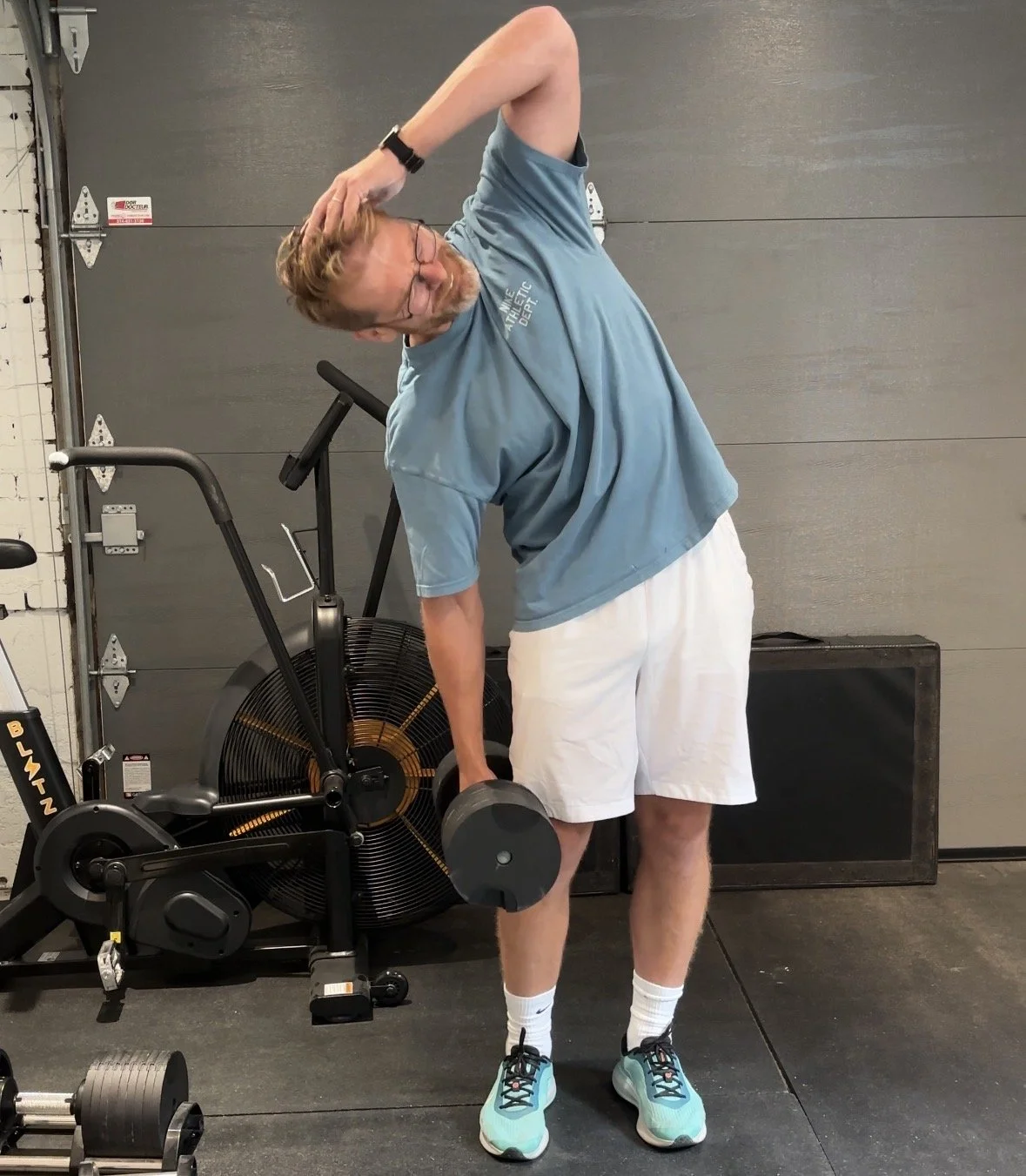
I’m a big proponent of loaded side bends for tennis players - not just because I want the spine to be strong and bendy, but because it’s a pattern that gets a lot of action on the court (remember, every time you serve you side bend).
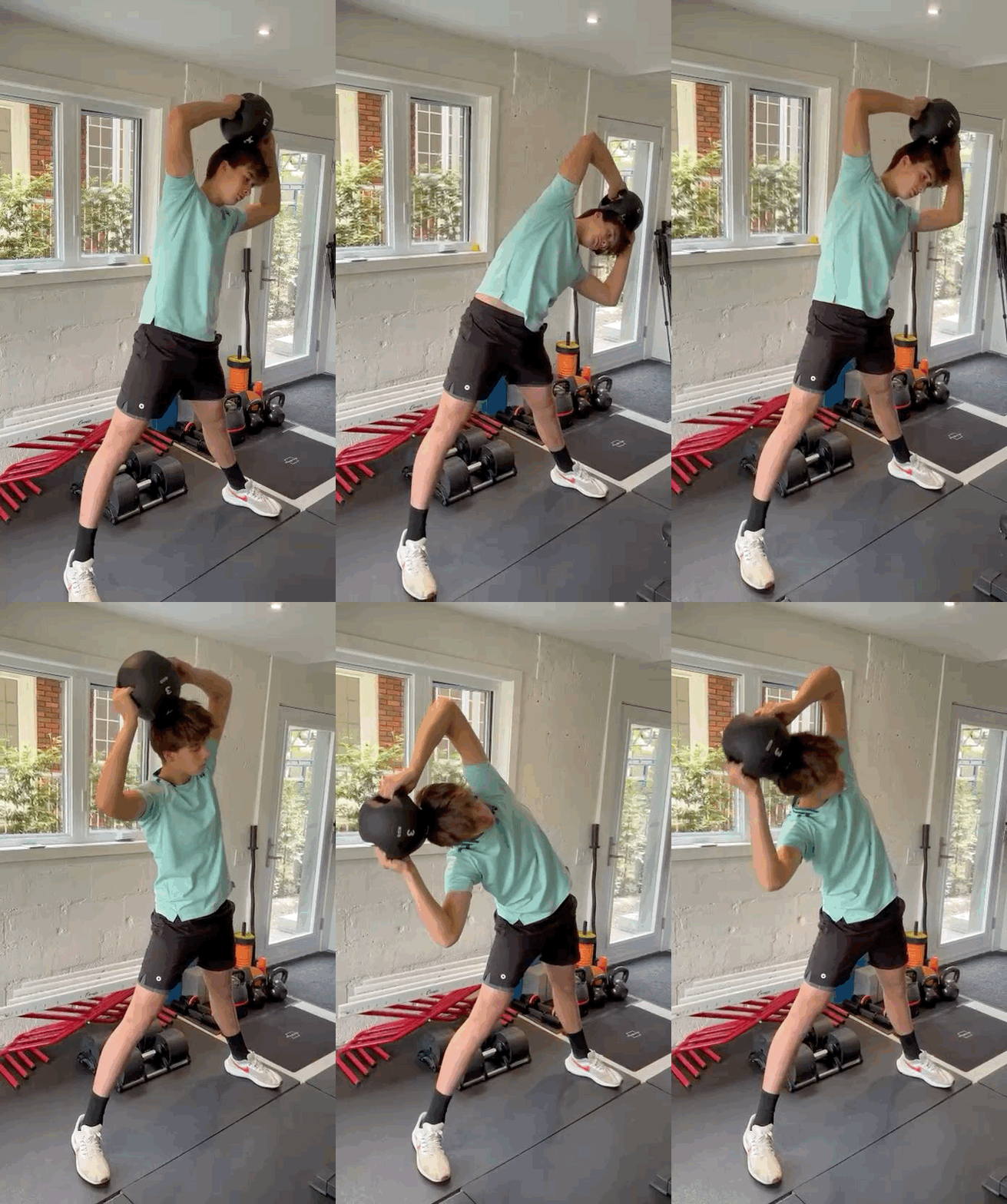
But maybe a loaded side bend isn’t the right starting point for you. Maybe you need to begin with a med ball side bend. Or a side plank is the most appropriate entry point. It gets the muscles along the lateral line firing, without movement (just yet).
Here’s what a progression might look like:
Side Plank → MB Tophat Sidebends → DB Side Bends → PL Long-Arm Side Bends
It might take several months to progress through this sequence of movements, but not only will your bending strength and range improve, you’ll likely build some serious confidence in your trunk’s resilience and tolerance to load.
Final Takeaway
The key takeaway here is this – don’t avoid spinal bending. That avoidance isn’t less dangerous. In fact, avoiding bending actions in training is more harmful than helpful.
The trick is, find a better starting point to gradually build tolerance to the positions you’re being demanded of on the court.
As a tennis player, you specifically need to expose your trunk to every pattern - flexion, extension, lateral flexion, rotation - and sometimes a combination of these patterns.
You’ll be better prepared and in less discomfort, I assure you.