Beware, if you read this post, your ideas surrounding tournament preparation might be turned upside down.
You see, there are several strategies employed by top athletes (and tennis players), in order to maximize their performance when they need it most. For tennis, that means tournament time.
In this article, I will highlight 3 of them. When implemented appropriately, they can be powerful.
At the time, I was deeply immersing myself in topics related to motor learning - and experimenting with this player in particular (he was quite open to new ideas).
One area that stood out to me was the topic of feedback - and its impact on learning.
Before we dive into this post, understand that playing tennis actually improves the stretch-shortening cycle (SSC). In essence, there are many ‘sister’ and ‘brother’ movements in tennis that utilize the SSC.
Picture this, you just battled your way through a 3-set, 3-hour marathon. You’re tired. Exhausted. Fatigued. The last thing you want to do is spend another 30 minutes or more recovering from the match.
But guess what, if you’re playing a match the following day - or worse, you’ve got another match coming up - you’ve got no other choice.
There are no shortages of training videos these days. Just open your Instagram or Facebook app and within seconds you’ll be inundated with more drills than you know what to do with.
The question is, will these drills help your tennis?
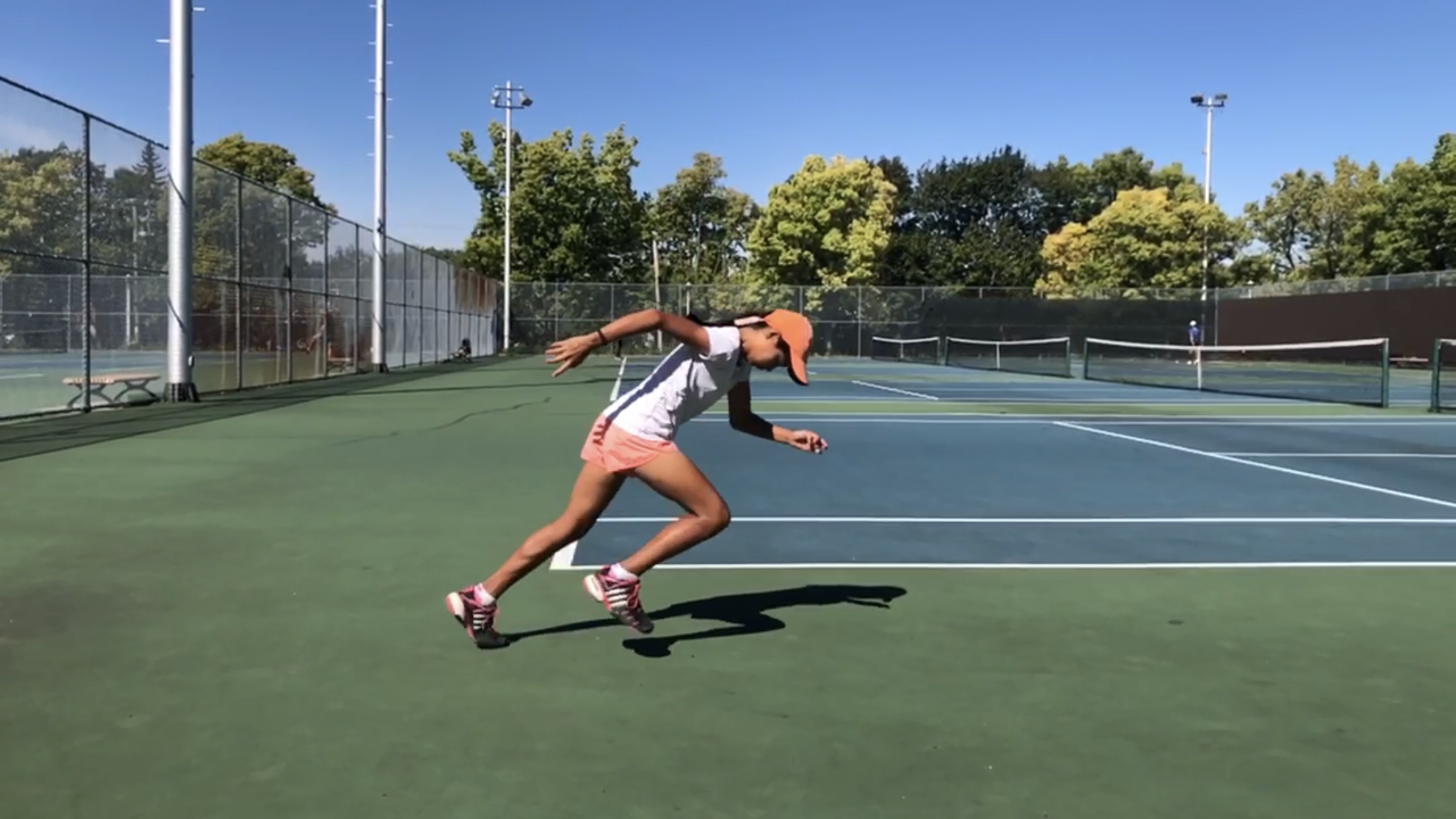
Tennis is a sport where players aren’t reaching top running speeds very often, if ever. Most movements in tennis are short in both duration and distance. Some older stats point towards 3 metres as being the average distance a player moves during each shot. But averages don’t really tell us the whole story.
Despite that, I always urge coaches and players to make sure there’s enough speed and acceleration training in their programs. Read More…
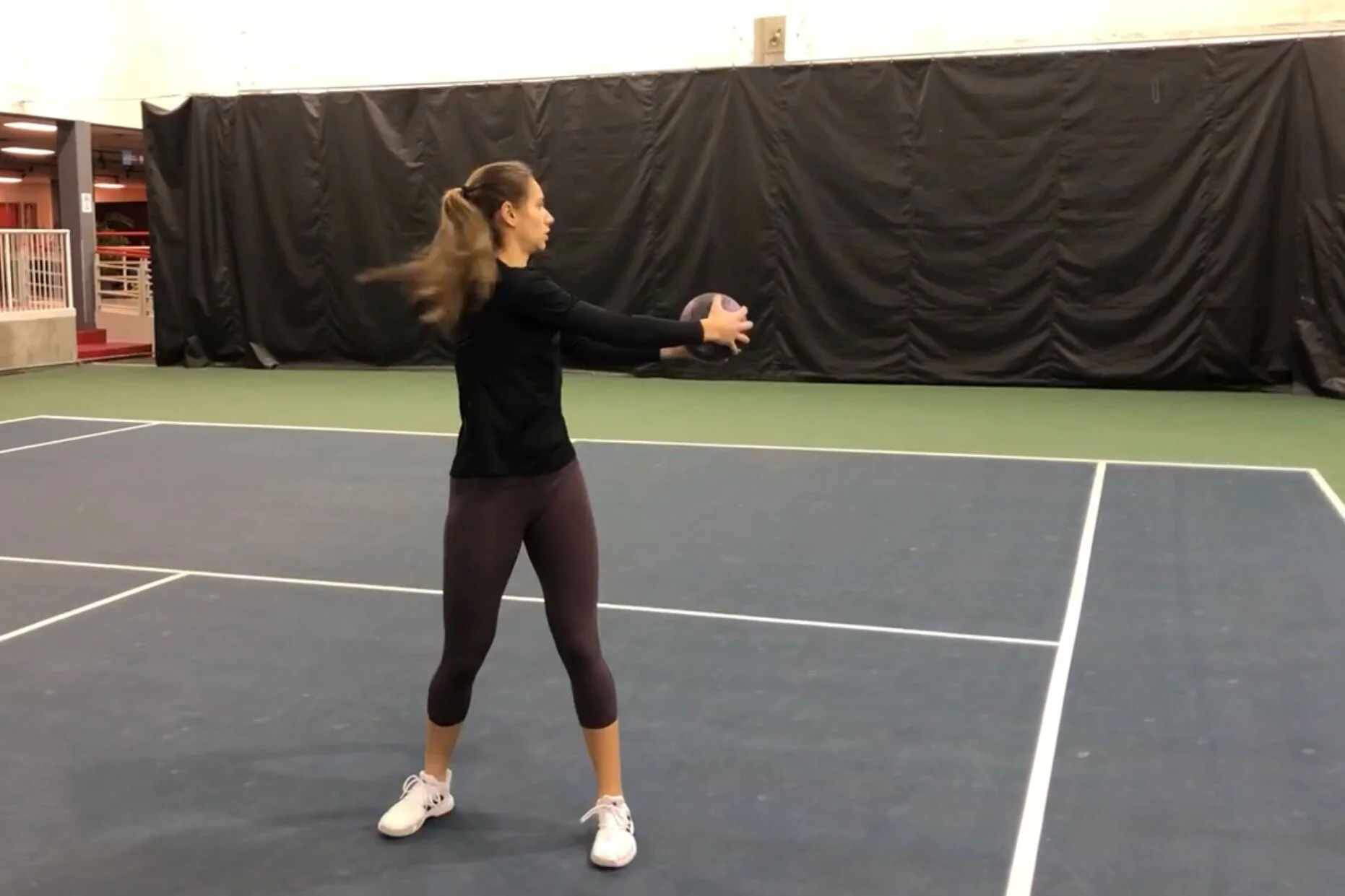
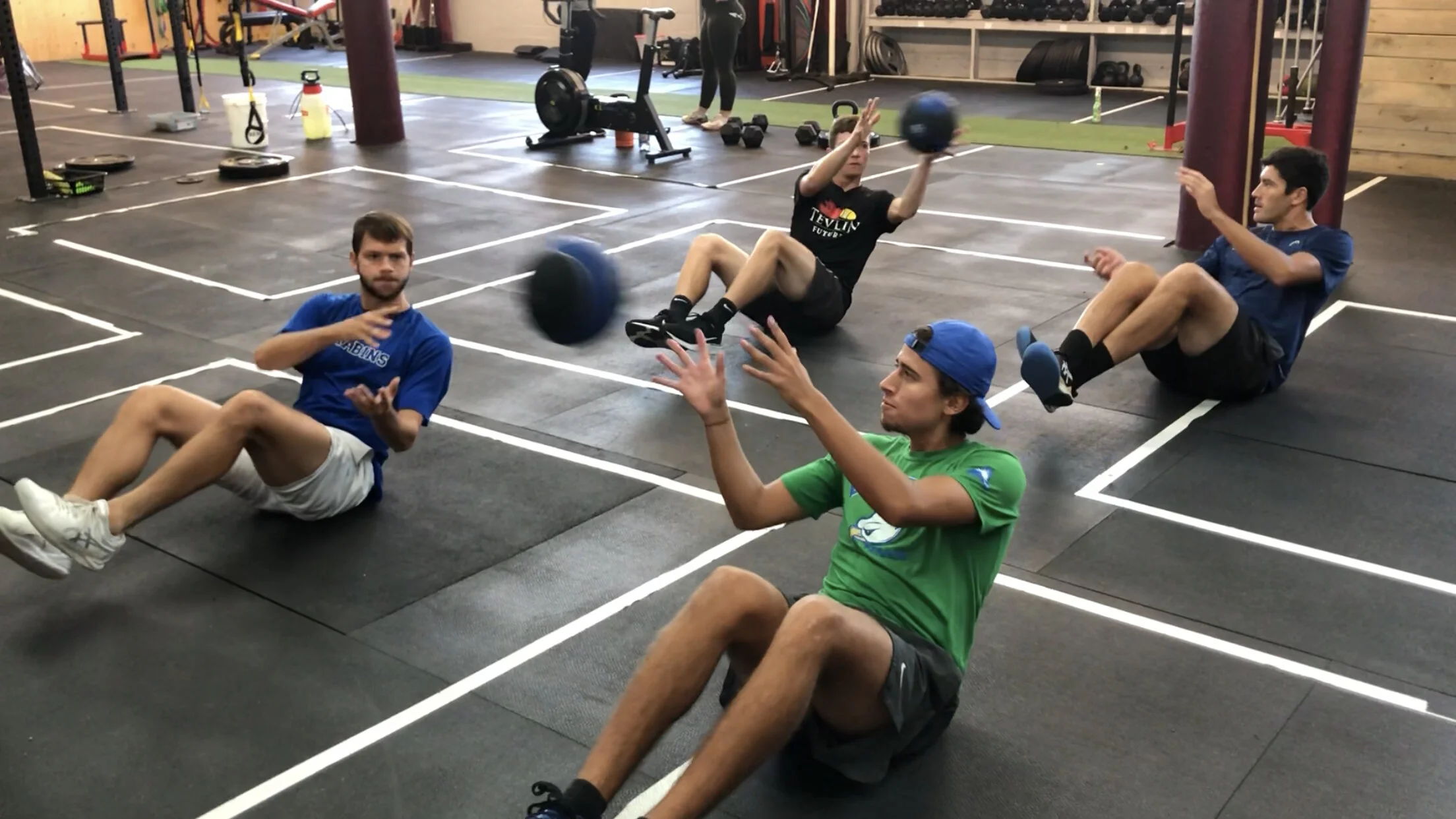
One of those ways is to use med balls for non-throwing scenarios. I know, for the most part, med balls are used for throwing purposes (and made for this reason as well). Throwing allows us to have a shorter deceleration phase and extend the propulsion phase - akin to doing a jump squat instead of a barbell squat for the development of lower-body power.
What does the typical practice in tennis look like? If you’re someone that’s been around the game for many years, it probably follows a pretty similar structure - mini-tennis, groundstrokes, volleys/overheads and lastly, serves and returns.
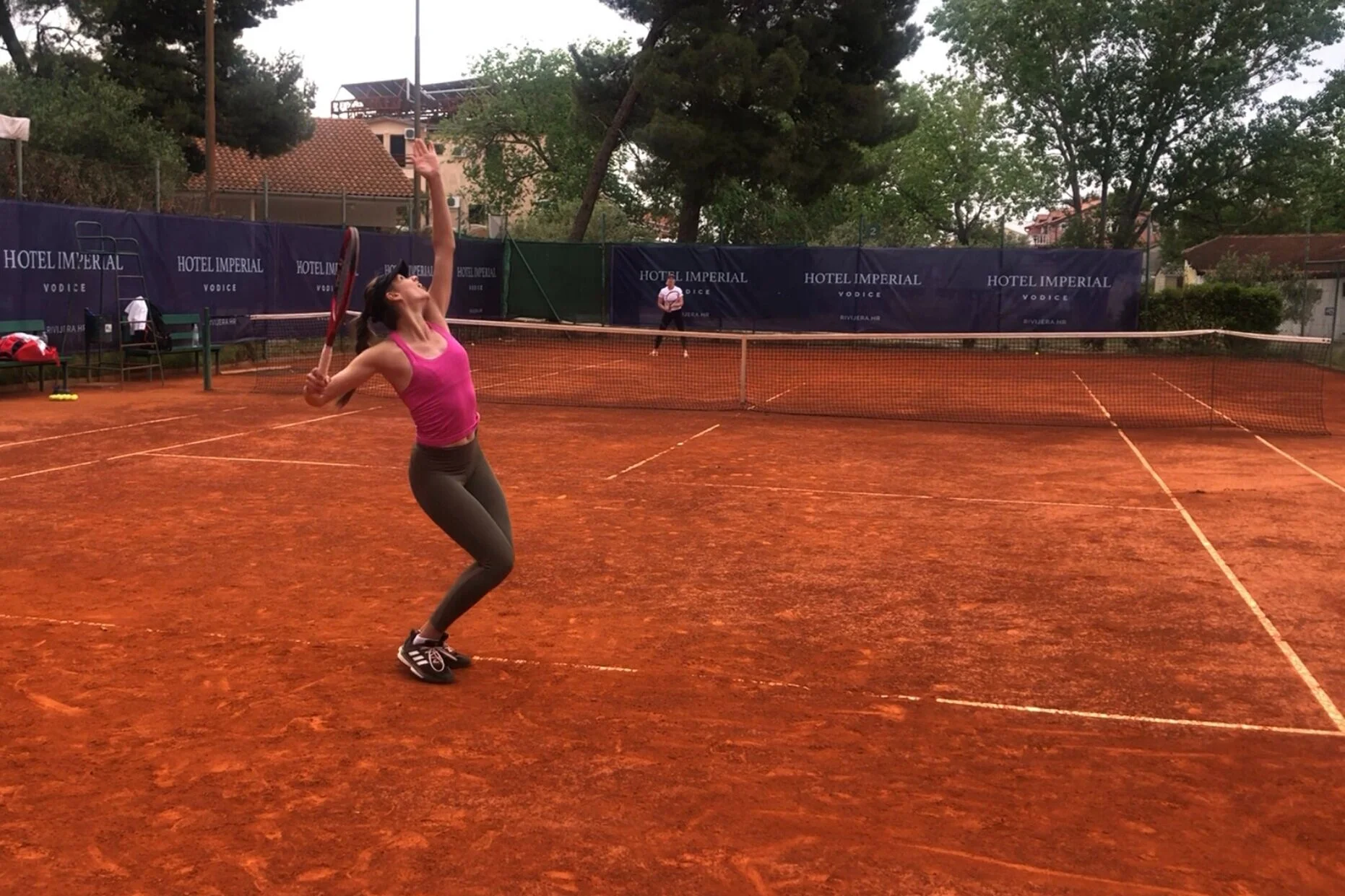
But what if a player’s priority is to improve the serve? Does it make sense to hit for an hour (or like in many tennis settings, beyond an hour) prior to serving?
Back in 2017, I wrote an article about plyometric training. The aim of that post was to introduce plyos, outline the mechanisms at play and to showcase their relevance to tennis performance (from both a research and practical perspective).
That article was a good starting point. It highlighted the diversity that exists when we look at tennis movement...and how plyos, because of their versatility - ie. they can be performed in a multitude of directions, velocities, amplitudes etc - might very well be the most important ingredient when it comes to better on-court movement.
In today’s post, I’m going to share a few thoughts on physical training for tennis. There isn’t a lot of research on these topics as they relate to tennis directly - but I’ll provide my own insights (with some basic science for more eager learners).
The 3 topics are med ball training, strength training and energy system development - all of which are framed differently than what you’ve probably seen or read elsewhere.
Here's the typical trainer's concern; it's believed that players outside of the top 100 have worries that a guy like Federer doesn't - i.e. travel expenses, points to defend and so on. Many of these players perform a concentrated physical prep block for 4-6 weeks in Dec/Jan (just prior to the start of the new season) and then a number of 1-2 week blocks during the course of the year. These same trainers will also agree that this isn't enough - performing one 4-6 week block along with 2-3 smaller blocks during the year is an insufficient amount of time to develop a quality like explosive power, for instance.
While there’s nothing normal about the current competitive tennis calendar, a few of my players are in a situation where they’re able to play a competitive league - organized by Tennis Canada.
I received several replies and comments from last week’s post on ‘why was I late’. Some of these were more ‘technical’ in nature. Others focused on the perceptual abilities that tennis demands (which if you haven’t noticed already, I can’t stress enough).
Over the last few weeks, I’ve had the chance to play more tennis. More than usual anyway. And it’s been really great (although I’m not in as good of shape as I thought I was!). The truth is, I’ll be 35 this year, which means I could, in theory, play senior ITF events. Maybe I will, who knows.
I recently wrote an article for ALTIS - an education platform & elite athlete training facility - where I outlined how I use their Kinogram Method with tennis players.
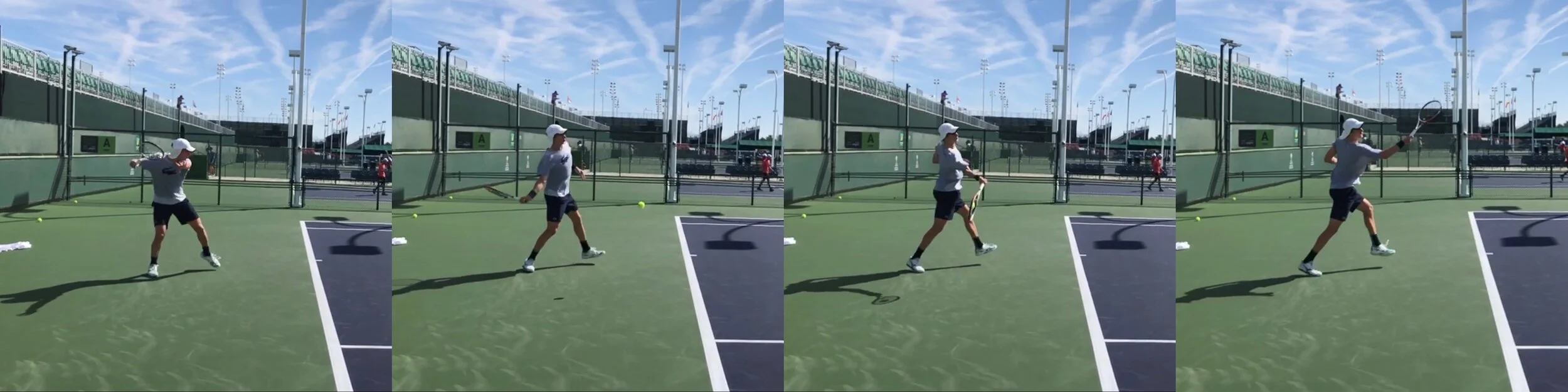
What I didn’t do in that post, however, was show a step-by-step approach of how to actually develop a kinogram - which is what I’m going to do here.
By this point, if you’re a tennis player, it’s no secret that you’re itching to get on the tennis court. Who wouldn’t be? It’s that time of year. Warmer weather. Flowers blooming. Outdoor tennis is around the corner.
Unfortunately, however, many players go about it the wrong way. Most, after a long layoff, are so eager to get back to the tennis court, they schedule multiple sessions that first week. Not only that, they’re so fired up that they hold nothing back. Running from side to side, hitting with that new found strength they’ve developed over the winter.
Here’s the thing, it’s kind of a mess out there, isn’t it? From the latest & greatest exercises to outdated information - and promises of quick results - the tennis fitness world can be a confusing place.
The truth is, there’s no one best exercise or one best program or one best [insert training fad of the week].
Instead, what we are left with are principles. Scientific principles to be exact. Like specificity and progressive overload and adaptation. So if a program is built on this type of foundation, improvements are almost ensured. If not...well, the reverse is probably true.
Don’t believe me? Consider for a moment what my clientele looks like:
I recently saw a post on a Facebook coaching forum. It was actually a question that went something like this, “coaches, have you seen any of your players improve their tennis because of their physical training?”.
My hand immediately covered my face and I began shaking my head in disbelief (no, no, no...it can’t be).
My answer to the question is an emphatic YES! Of course I’ve seen - on numerous occasions - physical preparation directly benefiting a player’s tennis game.
And in this post, I wanted to expand on these topics in more detail to add clarity to each.
First, here’s a bit of context. It’s been nearly 10 years since I began my master’s degree in sport science at the University of Edinburgh. It was 2010 and I was an eager young lad (as the scot’s would say).
Before then, I had a lot of ‘in the trenches’ experience - as a player and a coach. But going through a masters programme got me on the research train, and I’ve been on it ever since.