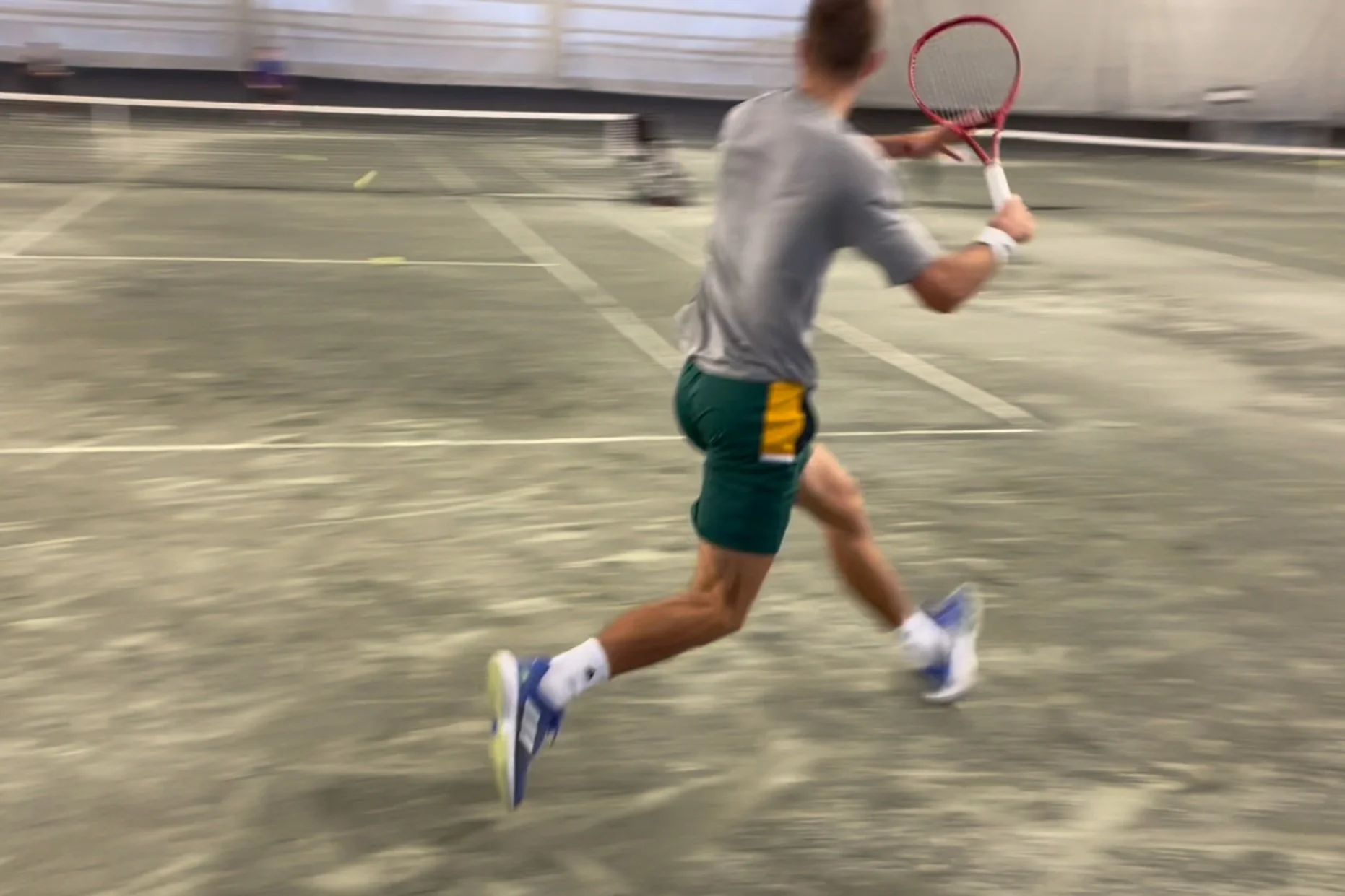
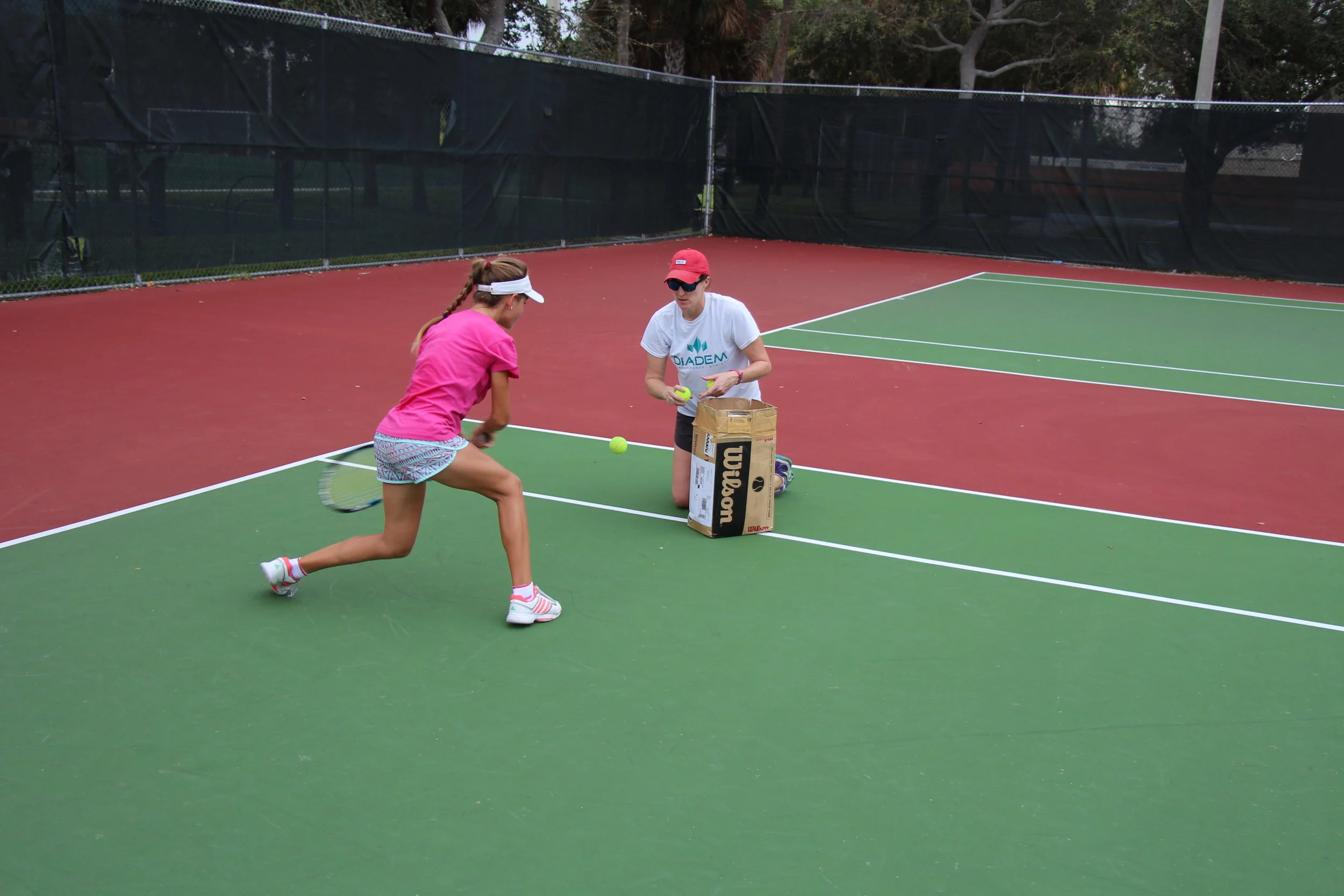
Most tennis players spend hours on the practice courts. And for good reason - tennis is darn tough. The question is, are these hours on court productive hours or redundant? How can we know? To assess whether our training is effective (and that it'll transfer to matchplay) we must first understand the demands of elite tennis.
In this post, we’ll review a study by Pereira et al (2016) that dives into the movement details of professional tennis. Other studies have previously analyzed movement characteristics; but, those studies replaced tournament matches with simulated matchplay. The present study observed movement characteristics via official ITF sanctioned matches.
Many of you have probably heard of the acronym SAQ before. If not, it’s referred to as speed, agility & quickness. Coaches & trainers from a variety of sports use these terms liberally and interchangeably. This is a problem. In the tennis world, many believe that these 3 qualities are supremely important for the movement success of an elite player. Another problem. When referring to speed, are we referring to maximum speed? Or something else? In tennis, as we’ll see later in this post, a player almost NEVER reaches top running speeds. Is it relevant then? Quickness, on the other hand, has multiple issues. First, what does it even mean? Does it mean being explosive? Does it deal with having fast feet (which is a misleading term in itself). Prominent researchers disregard quickness as a sport science term anyway - their reasoning...it’s too vague.
For many in the tennis world, this time of the year means tournaments, and lots of them. Players from all over are either preparing or competing in ITF Futures events, open tournaments and club matches. With that in mind, I thought it’d be interesting to take a look at a typical training week for players competing in weekend events/matches. Good news is, Dariusz Lipka (former 1000 ranked ATP player) was in town this past week to train & compete in an open event - a mini preparation block for his upcoming Futures circuit this summer.
Unless you’ve been living under a rock, you’ve likely seen countless videos on social media of athletes lifting big weights. And it’s not just athletes from sports like american football, baseball or hockey. Many athletes across various sports - like long distance running, swimming, volleyball - are lifting weights. We're not referring to light dumbbells but rather heavy loads and big lifts. The question is, why? What’s the rationale behind this type of training? Should tennis players learn from these sports?
I’ve briefly spoken about the importance of strength training for tennis. Some factors include the prevention of injury and increases in serve speed. In this post, we’ll dive deeper into the details of maximum strength training and it's relevance to the elite tennis player. Specifically, we’ll outline how max strength development can impact movement characteristics - including explosiveness, first step ability and acceleration.
Last week, we looked at the importance of a post-match recovery routine for the tennis shoulder. This is based on a couple key factors. First, the current trend of modern tennis is heavily reliant on successful serving. And second, scientific evidence points to losses in both range of motion (ROM) and strength, along with shoulder/arm soreness, post matchplay. If you haven't read that post, take a look at it here as it helps provide the framework for this week's follow-up article.
Picture this, you just got off court after a long 3-set battle. You’re tired, exhausted, fatigued (insert any other word you wish). The last thing you want to do is spend another 30 minutes or more recovering from the match. But guess what, if you’re a junior who’s playing another match the same day or a pro playing a match the following day, you’ve got no other choice. Well that’s not entirely true, you do have another choice and that’s to do nothing at all and basically just show up for your next match.
This is a follow-up to last week’s article. This post will attempt to clarify the misconception that dynamical systems theory (DST) and nonlinear pedagogy (NLP), which for the sake of simplicity I will use interchangeably, are solely game-based approaches to coaching. To highlight this fallacy, we’ll define both open and closed skills - which is often a poorly understood topic in and of itself. Finally, we’ll take a look at the complexity of learning through the lens of fixed versus variable movement patterns - what they are, how they’re developed and why both are necessary qualities for skilled movement execution.
When I was a teenager, I left home to train at a tennis academy - about 2 hours away from my family. I grew up in a small city where there was 1 outdoor tennis club and no indoor tennis - which is why I made the move. Growing up and playing at a small club, with no junior program, you tend to get friendly with older adult members. Most of my practice partners were over 35 with many above the age of 50. When I told them I was leaving, they said one thing that stuck with me until this very day - “hopefully they build on the game you have, rather than changing all of your strokes at once”.
There’s no secret that tennis is demanding but how demanding, we don’t always know. What I mean is, how do we measure on-court training load? Traditionally, time on court has been the go to method - but does this sole metric give us enough info? On the other side of the training spectrum we find physical preparation. Off-court training is arguably easier to manage than on-court training as specific loads, reps and sets are prescribed based on an athlete’s maximum abilities. But what about a 3-set tennis match? How do we measure the stress that has on a player? Many of us would assume that a 3-set match is taxing. But what if the scoreline was 6-1, 2-6, 6-2 and finished in about 1.5 hours? While another scoreline looks something like this - 6-4, 6-7, 7-6 and lasts for over 3 hours? Surely these 2 scenarios aren’t the same. We have a similar dilemma in practice settings. What if player A is playing all out during a session while player B brings the intensity down a notch?
BOTH Andy Murray and Novak Djokovic have been in the news of late with elbow injuries. While Novak is back competing, Andy is still on the sidelines with a suspected "tear" around the elbow (no further details have been mentioned). Both missed the Miami Open this year and while they'll likely be back in form soon, I thought it was a good time to discuss why elbow injuries happen and some ideas on what we can do about them.
A fairly recent retrospective study from Sports Health: A Multidisciplinary Approach analyzed serve volume in professional and junior tennis players. The researchers sought out to find how many serves are hit in a set (and match) by pros and juniors. The aim of the study was to use this serve data to develop an interval serve & groundstroke training program for elite tennis players. Although others have attempted to devise this type of program for tennis players, this is the first to my knowledge that has looked at more recent serve data while at the same time developing a program that took into account intensity (as a % of max speed) rather than just volume (i.e. number of serves).
I’m constantly trying to bridge the gap between how players should train off the tennis court and how they should train on the tennis court. It’s important to look at on-court tennis training through a physical lens as much as a technical or tactical one as these qualities are all interrelated. Let's look at an example to illustrate this point. Say you're working on retrieving tough wide balls on the backhand side. Not only is technique targeted (attempting to refine open stance backhands, for example), tactics (being able to send the ball back high/deep and with plenty of spin for example) along with the specific movement qualities (explosiveness, acceleration, deceleration) are also being trained. As you can see, it’s very difficult to separate one quality from another as they are all in some way related.
Today's post is a bit of a change up from previous articles. It's a Q&A with WTA pro tennis coach Sarah Stone. If you haven't heard of Sarah, it's probably because you've been living under a rock. She currently coaches american Alexa Glatch and is the founder of the Women's Tennis Coaching Association (WTCA).
The WTCA is an organization with a primary aim of helping coaches learn to work with female athletes. They also coach several WTA & ITF players and regularly share extremely educational training content - no fluff here.
Sarah previously coached former world no. 4, Sam Stosur along with other WTA & ITF female players. She has a wealth of tennis knowledge both as a coach and a player so when she agreed to do the Q&A, I was pretty excited. Here it is, enjoy!
The differences between junior players and pro players are more than meets the eye. Sure the pros have more experience, they’re fitter, have greater mental toughness and so on...but one area that the pros really excel at, especially compared to the juniors, is their warm-up. Now you may be thinking to yourself, “they are pros, it’s their job to have a thorough warm-up”. But the warm-up is much more than just a warm-up...it could make the difference between winning and losing, incurring an injury or performing at your very best.
There’s no argument that the first serve is quite important on both the men’s and women’s tours. The percentages speak for themselves - the top servers on tour win about 3 out of every 4 points when the first one goes in and only about half the points when they miss the first serve. Those are the stats. And although spin, direction, patterns etc. have a lot to do with that, it seems that the bigger your serve, the more points you win.
Which brings me to the focus of this article. I recently started a 6-week pilot study to see if an overload throwing program can improve serve speed. More specifically, I’ll be throwing a weighted ball (similar to a medicine ball only smaller) twice per week and tracking serve speed on a weekly basis.
This week I’ll be traveling to London UK to take part in the Functional Range Conditioning (FRC) course (aka an excruciating experience on your hips...or so I've been told). The FRC course - created by Dr. Andreo Spina, owner and founder of Functional Anatomy Seminars - is a system of mobility training rooted in scientific research. I’ve always integrated mobility & flexibility work with my athletes and have a pretty good understanding regarding its underlying mechanisms but why not learn from someone who has devoted their life’s work to improving mobility, joint function and athletic performance. And...he’s worked with a number of pro athletes, including world no. 4 Milos Raonic (see video below).
There’s no question the shoulder takes a beating in tennis. I mean, players use it on every shot. Whether that’s to create lots of torque to hit a big forehand or to stabilize the shoulder when punching a volley...the shoulder has many functions and roles. But perhaps the biggest toll on the shoulder occurs in a movement you wouldn’t normally consider...the deceleration phase (aka the follow-through phase) of the serve. This is the moment after impact where the posterior muscles of the shoulder act in an eccentric manner to essentially stop the head of the humerus from being dislodged from the glenoid fossa (aka think arm dislocating from shoulder...that wouldn’t be fun). Ellenbecker & Kovacs (2008) call the deceleration phase “the most violent of the tennis serve”. That’s a pretty big statement, and probably something that needs to be considered in the training of the tennis shoulder. But why exactly is this phase of the serve so critical? What type of strength is necessary? And what kind of exercises can tennis players incorporate into their program to optimize the serve keep the shoulder healthy? We’ll explore all of these points in this article, so read on.
How do different athletic qualities fit into the program of a tennis player? This is a complex question but one that deserves an answer. With information being so readily accessible these days, there are countless videos of players doing all kinds of things off the tennis court. But let me ask you this: just because a top 100 or 50 player is doing X or Y, does it mean it’s effective? Is it driven by some underlying scientific basis? Often times, it’s not. It’s a regurgitation of someone else’s training or a drill that was once seen before. If you’re a player, and someone is telling you to do squats on a stability ball…or ladder drills to develop agility and change-of-direction (COD) ability...seek alternatives as these are merely gimmicks that have little transfer to the aforementioned performance qualities.
Not enough is written about female athletes. They’ve got charisma, class and most of all, they’re damn good at sport. In tennis, the women’s game is constantly improving. Not only are women hitting the cover off the ball, but more and more feel & touch are becoming a part of their arsenal. Many believe the women’s game is still one-dimensional - but in the past several years, different types of game styles have emerged. Look at Radwanska, Halep and even Kerber - they’ve got variety. Not to mention the level of women's tennis has strenghtened - you just never know who’s gonna make it deep into a slam anymore. Sure Serena’s had some streaks where she’s dominated the women’s game but recently, the draws are more open.
Over the years I’ve coached many female tennis players...and I’ve learned a lot. From the tennis court to the weight room and everything in between. I’ll share my experiences in this article…and hopefully shed some light on female players.
This is the second post on testing athletic qualities in tennis. In the first post, I outlined what to use with tennis players to determine their strength abilities, explosiveness and acceleration. Check out that post here. In this post we’ll look at 4 other athletic qualities every tennis player should train - max speed, agility/change-of-direction (COD), power and endurance - AND how to test these qualities.